Thursday, February 9, 2012

What makes a good podcast?

I've wondered about this question for quite a while. Every now and again I'd go scouring the internet for something new to listen to with little success. Oh, there are many whose hearts are in the right place but there will always be something that makes me stop listening. It can be crappy audio; long introductions (or lengthy into music; slow, sleepy voices; or just no spark among the podcasters altogether. Oh and my pet peeve: fake performances.

"So, what's our topic this week, Bonzo?"

"We're going to talk about *insert topic*"

"Oh wow! This is going to be exciting!"

Me: "Oh please, shoot me now..."

Some of the guys doing solo podcasts are quite good. They are certainly authentic. The problem being that they're basically giving one lengthy monologue. One wishes you could insert another person in there so it could turn into a discussion - at least have someone add some other interesting snippet of info even if they agree on the subject.

However, with all that said and done, I believe the biggest problem I have with finding good podcasts is that I discovered these guys first:


The quality and authenticity of what they do just blows everything else I've heard out of the water.

So what do they talk about?
To quote them, Geekson is "a show created by geeks, for geeks, covering topics that geeks like to talk about."


Geekson consists of four friends (sometimes five) recording what they basically do when they get together (with just a tad more structure). And that is to discuss/argue about books, movies, games, tv shows, comic books, board games, and technology. They discuss themes in scifi and fantasy - vigilantes, the role of women in scifi, etc.

There's no act among them (even if they have an actor in the group :-D). They sit and discuss and argue and consider and laugh and just have fun doing something they're actually really good at. They've also been able to get some amazing interviews from actors, writers, composers, comic book artists, etc. Some of these include Joss Whedon, Christina Hendricks (one of the geeks' sister), Gina Torress, George RR Martin, David Brin, and Richard Hatch. And so many others who are just fascinating to listen to.

Who are the Geeks?
The geekson crew consist of four (five) geeks living in Los Angeles:
  • Aaron Hendricks - graphic designer and film maker
  • Peter Robinson - writer
  • Matthew Yang King - actor
  • Donald Marshall - video game professional
  • Lisa Lassak - film producer and editor
The Bad
There has to be something bad, right? Well, if I have to make one comment of criticism it's that their updates are very infrequent. They've slowed down quite a bit with some of the Geeks stepping into parenthood and them just being very busy with work. And you can't hold that against them. Work is work and GeeksOn is purely a hobby that doesn't bring in any income.  However, you will suffer from some symptoms of withdrawal and excessive pouting.


In closing, I'd heartily recommend giving them a listen. To hear what they've recorded already, head over to their archive where all the awesomeness is stored. They also have a Facebook page where they and other geekson fans share some other geeky stuff.

And if you have any other podcasts you can recommend, please let me know! I spend at least 80 minutes in my car (which is not much compared to others) and I would love to have something new to listen to!

<'}}}><

Tuesday, January 31, 2012

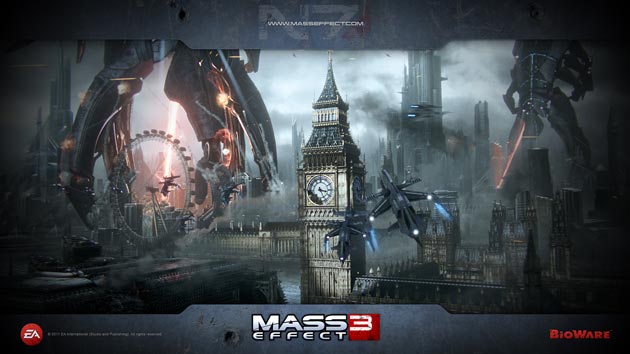
The Mass Addiction


It was August 2010 and I was bored. No, let’s be more dramatic... and I was desperate. Better! All the games I owned had been played through at least twice. Nothing currently in stores appealed to me. Things were beginning to look grim.

There were a lot of ifs that came into play right around there. If I hadn’t had a little over R100 credit at BTGames for games I had sold to them. If the price hadn’t been almost R200 less than what new XBOX360 games went for; if NAG hadn’t been packed with such rave reviews about it; if I hadn’t looked past the third-person-shooter aspect; if I hadn’t decided “Ag hel! Why not?!”

...then I would have missed the awesomeness that is Mass Effect!!


I bought both ME and ME2 that day (ME was selling on Classic for a mere R80. How could I not?). I don’t know what my reasoning was, but I started with ME2. My doubts and questions quickly washed away as Bioware’s drugs they lace into virtually all their games began to kick in.

Drug 1: Story

I am a sucker for a good storyline and Bioware doesn’t disappoint. When Shepard (the hero looking ready to kick ass on the front cover) fell into a planet’s atmosphere right in the beginning of the game – oxygen leaking from his suit – which spelt only one possible outcome, they had me. Evil, evil Bioware.

With games like the famous Baldur’s Gate titles, Star Wars: Knights of the old Republic (one of my all-time favourites) and Dragon Age (just as awesome though its sequel was a downer), the guys at Bioware have learnt the importance of a compelling story and they have learnt it well.

Drug 2: Choice & Consequence

The second drug they pump into your system is making choices throughout the game that matter. They don’t treat you like an idiot; just getting you to feel like you’ve given your two cents about an already fixed outcome. In a very real way, what you decide will determine how the game is going to pan out up ahead. And not just through one game but three. If a squad member dies, you’re not going to see him in the next instalment. If you save or change a governing structure, it’s going to have consequences later. If you were unfaithful in ME2 to a love interest from ME, then be ready to face the music in ME3.

Consequences. If other gaming companies picked up on how valuable a component it is to a game, the industry would never be the same again.

Drug 3: A Woman in the Lead

The final drug Bioware decided to add to an already addictive game is to allow Shepard to be a woman. Not since Laura Croft can I remember as powerful a woman in gaming as Female Shepard or FemShep as she is known.  And it isn’t just that they gave the main character breasts and that’s it. Playing a woman changes the dynamic amongst your crew and how people outside your ship treat you. What was a situation full of clashing testosterone could become one where your opponent underestimates you, getting his ass whooped for making a derogatory remark.


From all of this, I’m sure you can gather that I’ve consumed the Mass Effect games just as much as they have consumed me.

And the drug hasn’t stopped yes. March 2012 brings Shepard’s story to a close with what promises to be the most ambitious Mass Effect game yet!

All of us addicts are just chomping at the bit!


Friday, January 27, 2012

Book Babble - World War Z by Max Brooks


In 1984, the book The Good War gave an oral history of WW2. It comprised of a massive amount of interviews, ordered so that the reader had an idea of what happened before, during and after the war as well as the aftermath of it all. I haven't read it myself, but I definitely would like to.

This book inspired the one I actually want to talk twak about: World War Z. Subtitled 'An oral history of the zombie war'.

*insert groans - maybe even with almost throatless wheezes*

So let me establish my street cred (or lack of it) right here. I am not a horror fan. I have been following some Zombie stories, but it usually gets a :-/ reaction out of me. I understand they are scary beyond belief, but I don't want to sit and be scared. I'm just not one of those who get kicks out of it. So when it comes to horror stories, you bet my first reaction is to avoid it. This book was recommended to me by a friend. He lent it to me and I sceptically read the first couple of pages (just to humour him, y'know) and got hooked instantly.

You have so many arguments about Zombie outbreaks. Survival guides, what will work, what won't work. I recently glanced at an article on '7 Scientific Reasons a Zombie Outbreak Would Fail (Quickly)' Some non-Geekers out there would ask the question most of us would avoid answering: "Why on earth have such debates on things that aren't real and never will be?" But then, isn't that what scientists do too? (Well, on things not discovered yet, which is an argument we could apply here too).

So what's this book about?
Set in the near future, World War Z is an oral account of the war arranged in sections spanning the beginning, middle and end of the Zombie war (much like The Good War). That humanity won is a given (unless the Zombies had learnt to communicate, write, read and publish - ha). It starts off with the first infection, how the disease spread, denial, and blind panic. Then it starts moving towards overcoming the obstacles, learning, adapting and finally pushing back. The people who gave the accounts spans from all ages, races, countries, cultures and backgrounds: Doctors, body guards, various types of military & navy personnel, government agents, pilots, reporters, emergency broadcasters, film makers, services coordinators, senseis, clean-up crews and the simple refugees.

The good:There's a lot I could say about this book that I found awesome.
  • Brooks did his homework... and then some. Nothing in this book felt thumb-sucked. Be it governmental structures, emergency procedures, military doctrine, the types of weaponry available to us and their most relevant specifications or simply what cultures might focus on differently. I can't imagine the months (years) he must have spent just getting all his facts in a row. Unconsciously, he just about answered every single problem mentioned in the article I linked above without even trying.
  • Reading through the accounts, I never felt that it was the same guy giving the account with a different name. I can't go as far as to say that every person was so unique that I was immediately transported to their country and culture, but again, Brooks did his homework. Expressions, some speech patters, perspectives more unique to certain cultures, all of that he managed to bring to the table.
  • South Africa has a huge part to play in his story: Yes, many others wouldn't find it a big plus point, but I enjoyed seeing names of places I know. The one Afrikaner who gave a few lines did it in exactly the way I have heard other men of my culture speak. It just made me smile. Paul Redeker and his Redeker Report doesn't exist (you'll understand if you read the book), but the mentality behind him and his report was so distinctly old-school Afrikaans that I (raised in a ahem traditional Afrikaans mindset) totally bought it. I could see the old farts of the National Party sitting down and asking the types of questions asked and making the same conclusions. That's nothing short of awesome in my mind.
  • He hits very hard questions which makes you sit and puzzle it out for yourself. And sometimes, you don't even manage to find a suitable answer. Such as: my child is starving and there's no food to find anywhere. What would I resort to?
  • It's not horror. It's about zombies taking over the world, but the actual accounts have to do about people. It has to do with how we respond to what's going on around us and not about how the creepy crawly is going to chew on you. That means that the horror abhorred reader will get as much of a kick out of it as the fanatic.
The bad:
I think there is only one thing I can say is 'bad' and that's that it can get a little dry after a while. I found myself reading through only one account a day at some point, until it gets interesting again and then I'd shoot through three. So that's the one thing that was a bit of a downer. It's not necessarily that the accounts aren't relevant or that you don't get some information through it that builds onto your perspective of the world you find yourself in. But I guess it's also just a preference to one guy's story more than to another.

The final verdict:
It's a book that I asked my brother to bring down from England as I finished the borrowed book. I think from a writer's perspective this book is a gem. For a more scientific mind where the technology might be far more important than the politics, I think this book will be gratifying. For the Zombie freak, this is a really good book to sink your teeth into.

So in short: GO READ IT!